
The Inevitability of Fate
Strange Case of Dr Jekyll and Mr HydeThe theme that Jekyll's destiny is sealed by his own choices, and that the end is unavoidable.
increasing Bearing strength in each event
 decreasing
Bearing strength in each eventdecreasingThe Crossroads
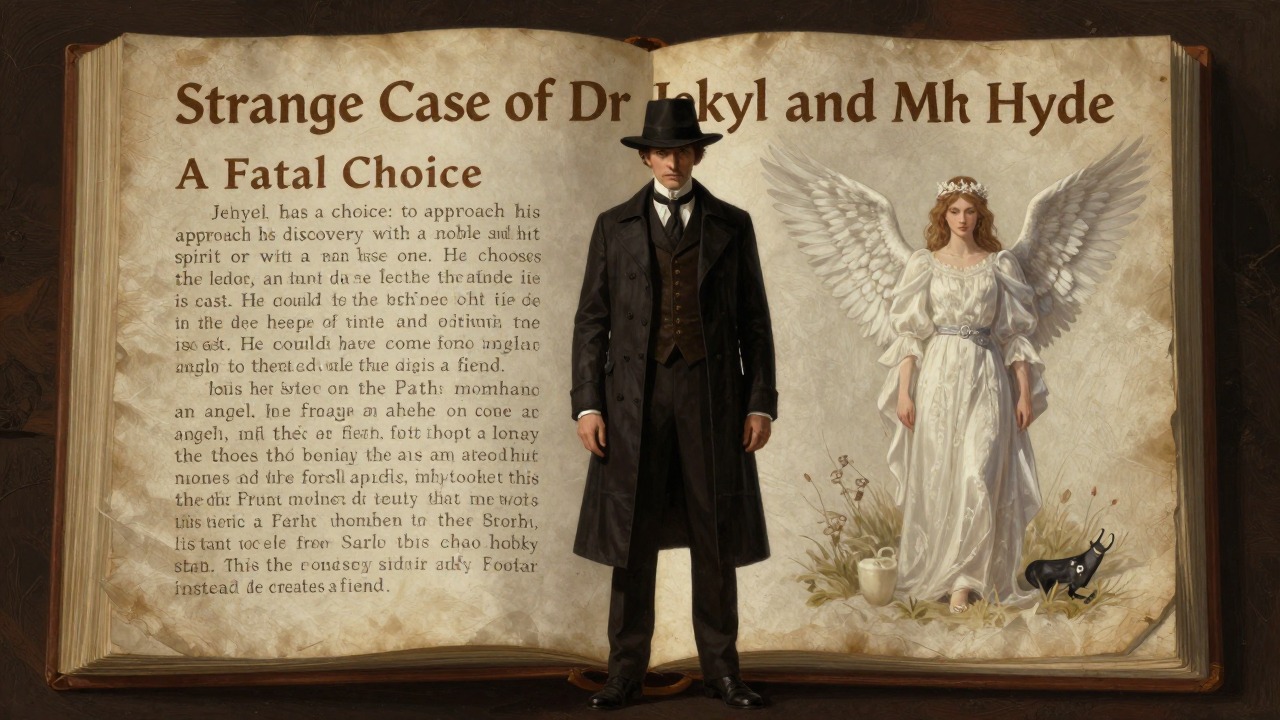
The Crossroads
A Fatal Choice
Jekyll has a choice: to approach his discovery with a noble spirit or with a base one. He chooses the latter, and the die is cast. He could have come forth an angel, but instead he creates a fiend.
The First Step on the Path
From that moment, his fate is set. He is on a path of increasing evil and loss of control. The novel suggests that our choices determine our destiny.
The Inevitability of the End
He foresees the danger, but he cannot stop. The fate is inescapable.
The Signs of Doom
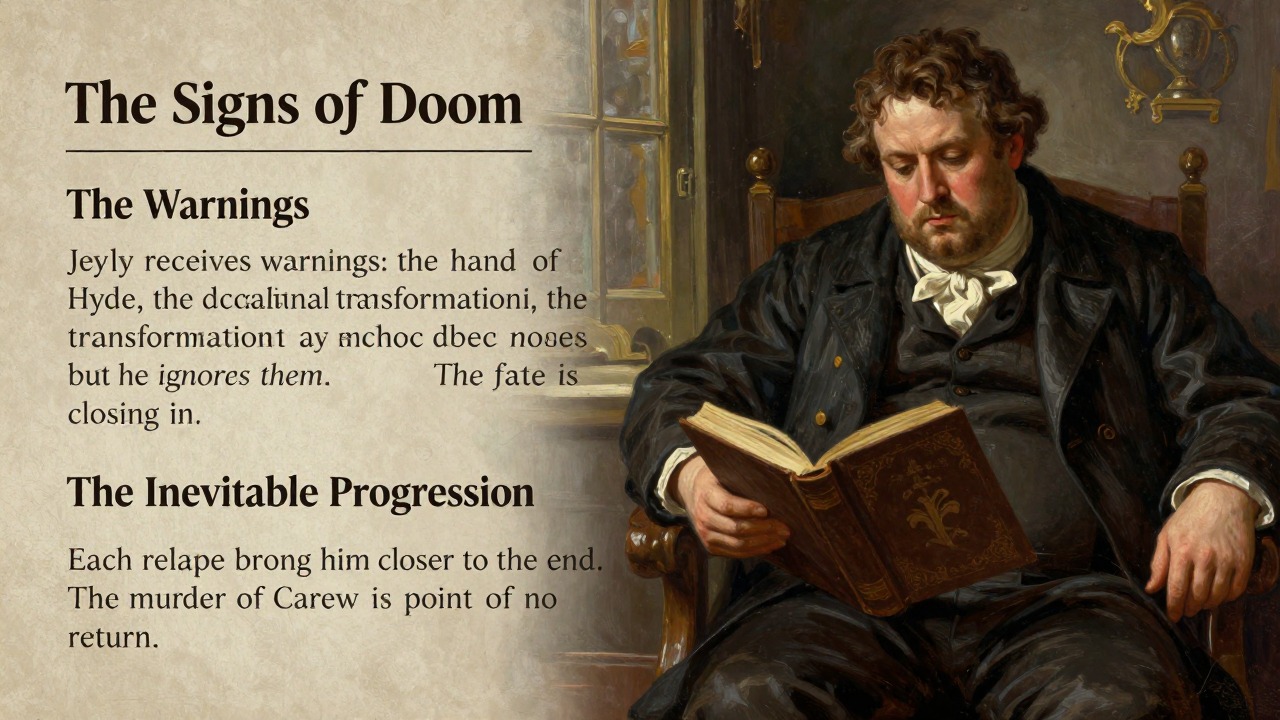
The Signs of Doom
The Warnings
Jekyll receives warnings: the hand of Hyde, the accidental transformation, the need for larger doses. But he ignores them. The fate is closing in.
The Inevitable Progression
Each relapse brings him closer to the end. The murder of Carew is a point of no return. The fate is like a Babylonian finger on the wall.
The Acceptance of Fate
Jekyll eventually accepts his fate. He writes his confession, knowing that he is doomed. The theme is that fate is unavoidable.
The Final Inevitability
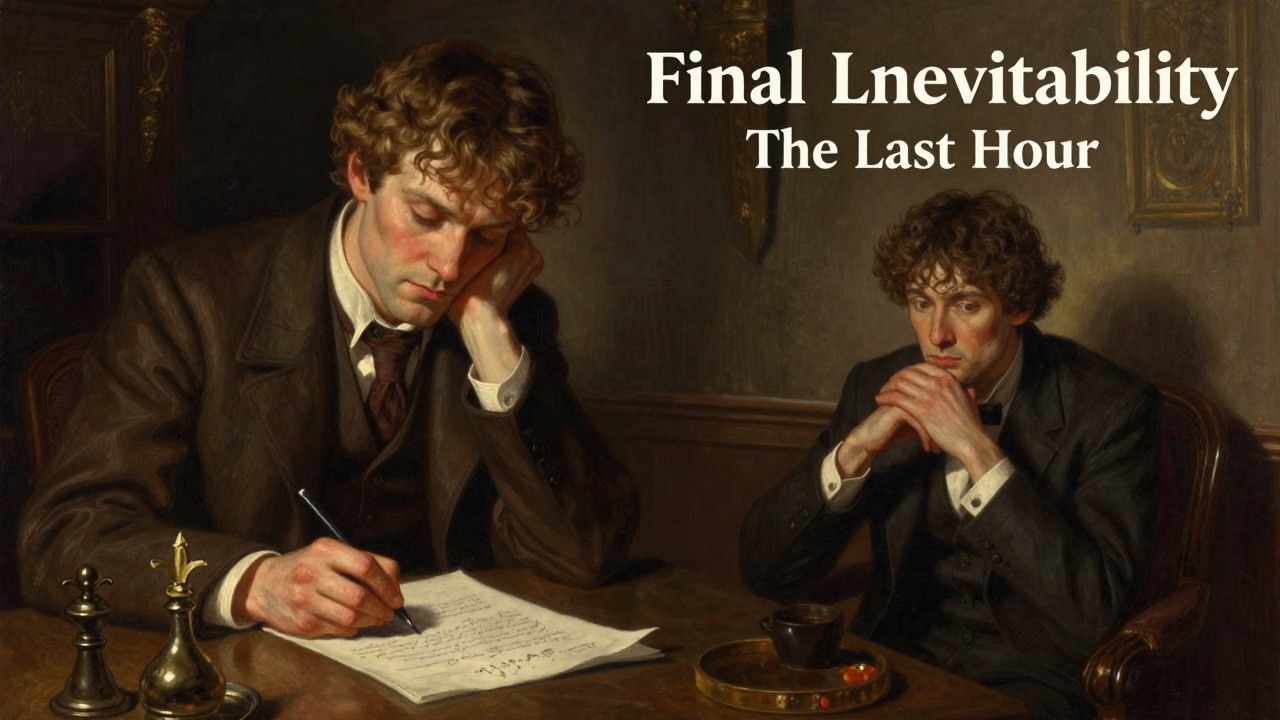
The Final Inevitability
The Last Hour
Jekyll knows that the end is near. He writes his confession and waits for the final transformation. He is indifferent to what happens next.
The Death of Two Selves
Hyde's suicide is also Jekyll's death. The fate is sealed. The novel ends with a sense of tragic inevitability.
The Moral of Fate
The theme is that our actions have consequences, and we cannot escape them. Jekyll's fate is a direct result of his choices. The novel is a tragedy of fate.
the night of the first transformation
throughout the story
the end of the novel
